Abstract Cancer Crab Lineart Design Review
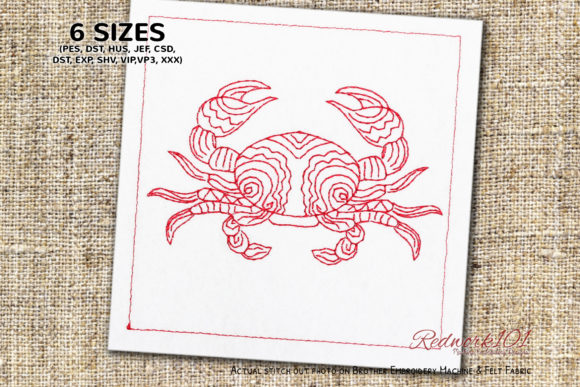
As an experienced embroidery designer who has spent years crafting assets for boutique shops, cafes, and handmade brands, I approach every new digital file with a critical eye. We are not just looking at pretty lines; we are evaluating how a design will translate from a screen to a finished product that builds brand identity. Today, I am reviewing the Abstract Cancer Crab Lineart Design. While the category lists this under Marine Mammals—a classification that seems like a data entry error given the crab subject matter—the visual potential of this piece is undeniable for small business merch and branded patches.
This review focuses on the practical application of the design in commercial settings. Whether you are an Etsy seller creating custom labels, a local bakery needing apron details, or a startup launching a uniform line, understanding the nuances of Abstract Cancer Crab Lineart Design is crucial before hitting the "stitch" button.
First Impressions: Personality and Visual Tone
The moment you view Abstract Cancer Crab Lineart Design, it strikes a balance between modern minimalism and playful charm. The term "abstract" suggests that this is not a literal, photorealistic rendering of a crustacean. Instead, it likely relies on fluid lines and geometric interpretations to convey the essence of the creature. This makes it incredibly versatile.
For a small business owner, this design feels professional yet friendly. It avoids the stiff, corporate look of standard clip art while maintaining enough structure to be legible when embroidered. The lineart style implies a clean aesthetic that works well for:
- Boutique Brands: Where a sophisticated, hand-drawn feel elevates product value.
- Creative Studios: Adding a touch of artistic flair to staff wear.
- Pet Brands: Since crabs are often associated with beach life and pets, it fits a coastal pet supply store perfectly.
The description notes that a box stitch is optional and that outer colors may vary. This flexibility is a massive asset for designers. It means you can adapt Abstract Cancer Crab Lineart Design to match specific brand color palettes without being locked into a rigid template. If your brand is rustic, you might skip the box entirely for a raw, organic look. If you need a premium finish, adding a contrasting box stitch can frame the design beautifully.
Real-World Business Applications
When I evaluate a machine embroidery design for commercial use, I imagine it on various surfaces. How does Abstract Cancer Crab Lineart Design perform in these scenarios?
Embroidered Patches and Labels
This is perhaps the strongest use case. The abstract nature of the lineart ensures that even at smaller sizes, the design remains clear. Small businesses often use patches as a signature mark on the sleeve of a jacket or as a hangtag on tote bags. The clean lines of this design will hold up well against the texture of denim or canvas, creating a high-quality embroidered patch that signals attention to detail to customers.
Apparel and Uniforms
Imagine a café where the baristas wear black aprons. A white or gold thread version of Abstract Cancer Crab Lineart Design on the chest creates a subtle but distinct logo. For cap embroidery, the linear style prevents the design from becoming too dense or heavy on the curved surface of a hat. It offers a modern twist compared to traditional block-letter logos.
Tote Bags and Packaging
For crafters selling handmade goods, a simple embroidered mark on a tote bag adds perceived value. Using this design as a small accent on the corner of a shopping bag turns a basic accessory into a walking billboard for your brand. It reinforces brand identity every time a customer carries their purchase.
Strategic Considerations and Limitations
While the design has strong potential, there are areas where caution is required. As a designer, my job is to ensure the final product looks as good as the digital mockup.
Size and Stitch Density
Because this is a lineart design, the stitch density is a critical factor. If the lines are too thin relative to the size of the embroidery, they may disappear into the fabric weave. Conversely, if the design is scaled up too large without adjusting the line weight, it could look sparse. You must test Abstract Cancer Crab Lineart Design at the exact size you intend to produce. Pay close attention to the spacing between lines; if the gaps are too narrow, the fabric may pucker, ruining the professional look of the item.
Fabric Texture and Color Contrast
The effectiveness of a lineart design depends heavily on the background. On dark uniforms, light threads will pop, but on textured fabrics like coarse linen or thick fleece, fine lines can get lost. Ensure you have sufficient contrast between the thread colors and the fabric. If you plan to use this on a dark shirt, verify that the thread count is high enough to cover the base material completely.
Curved Surfaces
For cap embroidery, the curvature of the front panel can distort straight lines. An abstract design helps mitigate this, but you should still run a test sample. If the design includes any text (which the current description does not explicitly confirm), tiny lettering on a cap front is risky and should be avoided unless the font is very bold.
Impact on Brand Identity and Customer Trust
In the world of small business merch, consistency is key. Customers associate high-quality embroidery with reliability and craftsmanship. When you use a well-executed design like Abstract Cancer Crab Lineart Design, you signal that your brand cares about aesthetics.
A clean, abstract logo suggests a modern, forward-thinking company. It moves away from generic imagery and establishes a unique visual voice. This boosts customer trust because the product feels bespoke rather than mass-produced. Whether it is on a product label for a soap maker or a sleeve detail for a florist's work shirt, the design acts as a silent ambassador for your business values.
Furthermore, the ability to customize the box stitch allows you to maintain visual consistency across different products. You can use the same core design on a tote bag, a hat, and a patch, simply adjusting the border color to fit each item. This creates a cohesive design asset library that strengthens your overall market presence.
Practical Designer Notes for Production
Before you commit to a bulk order of branded merchandise, follow these essential steps to ensure success with Abstract Cancer Crab Lineart Design:
- Test in Black and White: Convert the design to grayscale first. If it loses definition in monochrome, it will struggle in single-color embroidery.
- Check File Specifications: The description mentions that the box stitch is optional and colors may vary. Verify the actual digital embroidery file format and ensure you have the correct digitizing instructions. Do not assume the license terms; confirm commercial rights before using this on items for sale.
- Review Hoop Size: Ensure the design fits within your machine's hoop capabilities. If you are making small patches, a 4x4 hoop might be necessary, so check that the digitized area accommodates this.
- Stabilizer Selection: Use the appropriate stabilizer for your fabric. For stretchy knaps or lightweight linens, a cut-away stabilizer is usually best to prevent distortion.
- Create a Printable Mockup: Before stitching, generate a printable mockup to show clients or stakeholders. This helps visualize the final product and catch any issues early.
- Inspect Spacing: Zoom in on the design file. Are the lines touching? Is the density consistent? Poor spacing leads to puckering and a messy finish.
By following these guidelines, you can transform a simple lineart concept into a powerful tool for your business. Abstract Cancer Crab Lineart Design offers a flexible, modern solution for anyone looking to elevate their custom apparel or handmade product presentation.
Whether you are a seasoned decorator or a new Etsy seller, taking the time to evaluate the technical aspects of a design pays off in the quality of the finished product. With careful planning and the right execution, this design can become a signature element of your brand's visual language.